Waste Vegetable Oil: A Slick Way to Biofuel Your Portfolio
In August, I argued that Biodiesel stocks could be in trouble from more efficient ways to turn the oils and fats they use as feedstock into fuel, and concluded the article by saying that the likely winners are suppliers of oils and fats, not the processors. James Kingsdale, of Energy Investment Strategies has been thinking along the same lines. Last week he wrote an excellent overview of the major biofuels industries, including some stock picks. One of those stock picks was the diamond in the rough I wish I had known about when I wrote Biodiesel's Nightmare: Renewable Diesel...

Darling’s Renewable Diesel Diamond
In July 2013, Darling Ingredients (DAR: NYSE) and its joint venture partner Valero Energy (VLO: NYSE) commissioned the largest facility in North America to convert waste animal fats into renewable diesel. The facility was strategic located adjacent to Valero’s petroleum refining installation in Norco, Louisiana.
At the time the facility was capable of pumping out 12,000 barrels of renewable diesel per day that could be dropped directly into Valero’s distribution network and blended with fossil fuel. Even at that production level the facility showed promise to deliver strong dividends back to its owners. The partners named their venture Diamond Green Diesel and celebrated the unparalleled achievement.
The two partners in Diamond Green...
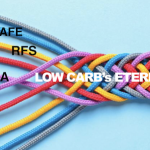
Low Carbon Fuel Rules: From CAFE to LCFS and Everything In Between
The Whole Darn Low Carbon Landscape. How they Work, How they Work Together, and How they Might Work Better
by Joanne Ivancic, executive director, Advanced Biofuels USA
The Trump Administration is taking a new look at Obama Administration era Co2 regulations. On the transportation side, these include reviewing Corporate Average Fuel Economy (CAFE) standards; threatening to take away California’s authority to set their own mileage and pollution controls, including CO2 (carbon dioxide) emission reduction standards; and quarreling with the petroleum and biofuels industries over implementation and enforcement of the Renewable Fuel Standard (RFS).
Thus, the Clean Air Act (CAA), California’s unique authority...
EPA’s 2018 Renewable Fuel Targets Disappoint Producers
In Washington, the Environmental Protection Agency released its final Renewable Fuel Standard renewable volume obligations for 2018. The agency finalized a total renewable fuel volume of 19.29 billion gallons , of which 4.29 BG is advanced biofuel, including 288 million gallons of cellulosic biofuel.
As the Renewable Fuels Association explained: “That leaves a 15 BG requirement for conventional renewable fuels like corn ethanol, consistent with the levels envisioned by Congress in the 2007 Energy Independence and Security Act. The 2018 total RFS volume finalized today represents a minor increase (10 million gallons) over the 2017 standards, and a modest increase...
Green Diesel At Scale
Jim Lane A now-complete 142 million gallon green diesel monster project will easily deliver big on renewable energy targets and greenhouse gas emissions reduction. But it also offers a material path to profits for its parents, Valero Energy and Darling International. In Louisiana, Darling International (DAR) announced that Diamond Green Diesel, the joint venture between Valero (VLO) subsidiary Diamond Alternative Energy LLC and Darling International , has reached mechanical completion and the startup process will lead to full production of renewable diesel. Once in full operations, the 9,300 barrel-per-day (142.5 million gallon) plant in Norco,...
Dyadic: a 5-Minute Guide
Jim Lane Dyadic International, Inc. is a global biotechnology company that uses its patented and proprietary technologies to conduct research, development and commercial activities for the discovery, development, manufacture and sale of products and solutions for the bioenergy, industrial enzyme and biopharmaceutical industries. Address: 140 Intracoastal Pointe Drive Suite 404 Jupiter, Florida 33477 Year founded: 1979 Stock Ticker: Pink Sheets: DYAI Type of Technology(ies) Patented and proprietary C1 platform technology based on a unique fungal microorganism which is programmable and scalable in producing enzymes and proteins in large quantities ...

Neste Sells 1 Billionth Gallon of Renewable Diesel
Neste reaches 1B gallons renewable diesel sale, runs in fire trucks, ambulances and school vehicles
In Texas, Neste U.S., Inc. (NEF.F, NESTE.HE, NTOIF, NTOIY) is celebrating its 1 billionth gallon of Neste MY Renewable Diesel sold in North America which has effectively helped reduce more than seven million metric tons of greenhouse gas emissions in the Earth’s atmosphere. This is the equivalent of removing 1.6 million passenger vehicles from the road for one year.
“There’s never been a better time to take a closer look at the steps we’re taking to ensure we’re leaving our planet in a healthier state for future generations,”...

EPA Reneges on Trump’s Biofuels Deal
by Jim Lane
“EPA Reneges on Trump’s Biofuels Deal”, said the Iowa Renewable Fuels Association in reacting to the US Environmental Protection Agency’s new plans for fulfilling federal renewable fuel requirements. EPA released a proposed supplemental rule for the Renewable Fuel Standard today, and the bioeconomy is up in arms, and the outrage is centered in farm country, once a Trump bastion of support.
“IRFA members continue to stand by President Trump’s strong biofuels deal announced on Oct. 4, which was worked out with our elected champions and provided the necessary certainty that 15 billion gallons would mean 15 billion gallons, even after...
EPA increases US Renewable Fuel Standard Volumes, But Only Slightly
Jim Lane In Washington, the U.S. Environmental Protection Agency announced final volume requirements under the Renewable Fuel Standard program today for the years 2014, 2015 and 2016, and final volume requirements for biomass-based diesel for 2014 to 2017. This rule finalizes higher volumes of renewable fuel than the levels EPA proposed in June, boosting renewable production and providing support for robust, achievable growth of the biofuels industry. “The biofuel industry is an incredible American success story, and the RFS program has been an important driver of that successcutting carbon pollution, reducing our dependence on foreign oil, and sparking...
REG Buying European Biodiesel From Used Cooking Oil Producer
Jim Lane US biodiesel leader heads for the EU – what’s up with used cooking oil, and what is REG’s path forward with the German-based biodiesel producer? In Iowa, Renewable Energy Group and IC Green Energy announced that REG will acquire ICG’s majority equity ownership position in German biodiesel producer Petrotec AG (XETRA: PT8). Closing of the transaction is expected before year end. REG CEO Dan Oh Last month, REG CEO Dan Oh told The Digest, “We’re not done growing, that’s for sure! We’ve done something of...
Betting On Renewable Diesel: Valero or Darling?
Valero Energy (VLO: NYSE) recently disclosed ongoing discussions to expand its renewable diesel production to a second plant that would be built and managed by its Diamond Green Diesel joint venture with Darling Ingredients (DAR: NYSE).
The proposed plant that would be located in Port Arthur, Texas and turn out 400 million gallons of renewable diesel and 40 million gallons of naptha per year. As a food by-products processor Darling has easy access to low-cost used cooking oils and animals fats that serves as the feed stock for Diamond Green’s renewable diesel production.
Valero management has cited increasing global demand for low- to no-carbon...
Biodiesel Christmas Caroling: FFA La La
Jim Lane “On the way” forever, talked up by all, deployed by some – technologies that handle high free fatty acid feedstocks like used cooking oil are coming into their hey-day, via players like REG, Novozymes, Pacific Biodiesel, Blue Sun, Piedmont, COMAC and more. Christmas come early for advanced biofuels? One of the most alluring targets in advanced biofuels although cruelly mis-named is in the world of free fatty acids. Most of the oils currently used for biodiesel are sourced from soybeans, palm or rapeseed, and precisely because they contain less than 0.5%...

North American Outlook on Biofuels Challenges and Opportunities
Challenges and Opportunities in Biofuels
By Steve Hartig, Former VP of Technology Development at ICM
The North American biofuels market can be split into three main segments all of which have major dynamics. What I would like to do is give a high-level overview of what I see as some of both the challenges and opportunities across these.
Ethanol which is a produced from corn and sorghum in about 200 plants mainly across the Midwest and blended at about 10% with gas. Majors such as POET, Green Plains, Flint Hills, Valero, ADM and Cargill do a bit more than half of the 16...
Darling Ingredients: At the Margin
by Debra Fiakas CFA This week Darling Ingredients (DAR: NYSE) reported earnings of $100,000 on net sales of $874.7 million in the first quarter ending March 2015. Darling is a recycler of sorts, collecting by-products of the food production industry and recycling the left-overs and waste into proteins, fats and leathers. Nothing goes to waste. Every last chicken feather, hide, gallon of used cooking grease and cake crumb gets up-cycled to a usable material for feed, food, fuel or clothing. Its customers include pet food producers, personal care manufacturers and textile users, among others. Darling used...
Biodiesel Tax Credit Back In US Budget Deal
by Jim Lane
In Washington, the US Congress passed its budget deal, and among the items in the deal was a retroactive restoration of the $1 per gallon biodiesel tax credit for 2017. The bill did not include a provision for 2018 and future years.
The budget compromise had run into headwinds in the Senate, in the form of a voting delay imposed by Rand Paul of Kentucky, while opposition in the House from a group of Democrats and hardline conservatives had put the bill into some degree of jeopardy.Renewable Energy Group CEO Randy Howard said “We are pleased that Congress recognized...
Hither and Yon: Transmission and Biofuels
In the most recent two installments of Energy Tech Stocks' interview with me cover my views on transmission stocks, and biofuel stocks. Readers of AltEnergyStocks know that I am a big fan of electricity transmission, a theme I keep coming back to. You also know that I have a very ambivalent relationship with both ethanol and biodiesel. So I liked Bill's transmission article, but I just wasn't able to convey to him the subtleties of how I feel about biofuels. But he got one thing right: the owners of biofuel feedstock are likely going to be the biggest winners....