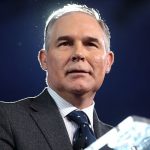
EPA Administrator Scott Pruitt Resigns
by Jim Lane
In Washington, EPA Administrator Scott Pruitt has resigned.
US President Donald Trump announced the exit on Twitter, commenting, “President Donald Trump announced Pruitt’s exit, saying on Twitter “I have accepted the resignation of Scott Pruitt as the Administrator of the Environmental Protection Agency. Within the Agency Scott has done an outstanding job, and I will always be thankful to him for this.”
Deputy Administrator Andrew Wheeler becomes acting administrator.
The Digest’s Take
Elsewhere in the media, it is widely reported that Pruitt was undone by a growing number of controversies and investigations relating to his conduct as EPA Administrator, particularly relating...
Hurricane Sandy: “It’s Global Warming, Stupid”
Garvin Jabusch On today's broadcast of the news show Democracy Now hosted by Amy Goodman, Cynthia Rosenzweig, co-chair of the New York City Panel on Climate Change, went out of her way to begin her comments on Hurricane Sandy and the effects of global warming to issue a disclaimer: "but first Amy, I need to make something very clear: any one storm cannot be associated directly with climate change…we have to be very careful not to say Hurricane Sandy was caused by climate change." Unfortunately, this could easily be taken to imply that warming and Sandy may have...
350.org’s Smart New Campaign
Garvin Jabusch Many parallels exist between the college campus divestiture campaigns of the 1980s and today. Both were/are seeking to apply intense student and community pressure to persuade boards of trustees to get endowment monies out of investments in businesses or locations perceived as undesirable. In the '80s it was South Africa and Apartheid that students objected to. Back then, one could almost conceive of college students versus a beleaguered South African government as something of a fair fistfight between entities with comparable chances of winning popular opinion and thus investment dollars to their side. And indeed the students...
The Worst Waste
Jim Lane Peter Brown of FFA Fuels, promotes his company these days with the pithy slogan, “Fuels from the Worst Waste Around.” Which of course raises the legitimate question, what is the worst waste, and can we find a use for it? Discussions of worst waste will usually focus on the obvious say, landfill or the odious say, medical or nuclear waste. Toxicity and longevity are typical concerns, and that’s one of the reasons why nuclear energy remains controversial to this day. No Waste in Nature As LanzaTech’s Jennifer Holmgren observed in a recent article by...
The Farm Bill: 5-Minute Guide to the Energy Title
Jim Lane Only 5 min BigStock Photo What’s in that Durn-tootin’ US Farm Bill, anyhow? For the harried taxpayer, some relief. For energy security and rural economic development, targeted investments that now head to the legislative floor. Here are the need-to-knows. In Washington, the House and Senate Agricultural committees have now passed their respective versions of the proposed 2013 farm bill, which would take effect for fiscal 2014 through fiscal 2018. Both bills have energy titles meaning that, should they find passage, as expected this summer,...
Climate Change & Corporate Disclosure: Should Investors Care?
Charles Morand On Monday morning, I received an e-copy of a new research note by BofA Merrill Lynch arguing that disclosure by publicly-listed companies on the issue of climate change was becoming increasingly "important". The note claimed: "e believe smart investors and companies will recognize the edge they can gain by understanding low carbon trends." I couldn't agree more with that statement. It was no coincidence that on that same day the Carbon Disclosure Project (CDP), a non-profit UK-based organization that surveys public companies each year on the state of their climate change awareness, was...
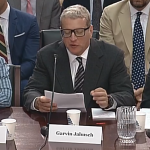
Creating a Climate Resilient America: A Green Investment Adviser Testifies To Congress
The prepared remarks of Garvin Jabusch, Chief Investment Officer of Green Alpha Advisors before the House Select Committee on the Climate Crisis in Washington, DC, July 25th, 2019.
Chairwoman Castor, Ranking Member Graves, committee members, thank you for the opportunity to testify and contribute to this important conversation.
Climate disruption and resource degradation present significant threats to and opportunities for American business. Every sector and industry are affected, and my industry of asset management, in its role deploying capital across the economy, is directly exposed to it all, risks and opportunities inclusive.
First, risks. The purpose of investing is to preserve and...
How Economics Finally Brought Community Solar to IREA
by Joseph McCabe, PE My uber-conservative utility, Intermountain Rural Electric Association (IREA) has been against solar since before I moved into the service territory in 2007. IREA's long-serving general manager, Stanley Lewandowski Jr., would include climate change denial leaflets in the envelope along with the monthly electric bills. Now he is gone, and attitudes seem to be changing towards solar. With a new general manager, a couple of forward thinking board of directors and a handful of active IREA owners/members the solar landscape has changed and now includes a large solar project. Currently IREA...

EPA Reneges on Trump’s Biofuels Deal
by Jim Lane
“EPA Reneges on Trump’s Biofuels Deal”, said the Iowa Renewable Fuels Association in reacting to the US Environmental Protection Agency’s new plans for fulfilling federal renewable fuel requirements. EPA released a proposed supplemental rule for the Renewable Fuel Standard today, and the bioeconomy is up in arms, and the outrage is centered in farm country, once a Trump bastion of support.
“IRFA members continue to stand by President Trump’s strong biofuels deal announced on Oct. 4, which was worked out with our elected champions and provided the necessary certainty that 15 billion gallons would mean 15 billion gallons, even after...
Trick and Treat: Energy loans under review, as Hallowe’en looms
Jim Lane The Obama Administration got tricked, and handed out some bad energy loan candy. Turns out that the Washington press corps, and House Republicans, were asleep on the job, too. Until the money ran out, that is. We’re not sure if there’s been any more perfect timing for an Obama Administration announcement, than the news that it will start up an investigation of the DOE loan guarantee program just as Hallowe’en weekend got underway. Hallowe’en, is of course, the time of disguise, the celebration of the macabre, and the ghostly return of the...
Will McConnell Kill The Bull Market?
By Tom Konrad, Ph.D., CFA
The risks of playing politics
The American news media often tries too hard to be “balanced” when talking about politics.
Depending on which news sources you rely on, you may be hearing that “congress” is having trouble passing bills to fund the government and raise the debt ceiling. More partisan sources will be blaming it on the Democrats or the Republicans, depending on their political bent.
I generally consider myself an independent who cares deeply about the environment and competent government. Since the rise of Donald Trump, the Republicans have shifted from being the party of big business...
Aggressive New CAFE Standards; The IC Empire Strikes Back
John Petersen Last Friday President Obama and executives from thirteen leading automakers gathered in Washington DC to announce an historic agreement to increase fleet-wide fuel economy standards for new cars and light trucks from 27.5 mpg for the 2011 model year to 54.5 mpg for the 2025 model year. While politicians frequently spin superlatives to describe mediocre results, I believe the President's claim that the accord "represents the single most important step we've ever taken as a nation to reduce our dependence on foreign oil" is a refreshing example of political understatement. After three decades of demagoguery, debate,...
Biofuel Industry Reacts To EPA New Renewable Fuel Standard
Yay or Nay for EPA? RFS Volumes out for 2020, Biodiesel for 2021 – What’s the reaction from industry?
by Jim Lane
What’s the reaction from industry? Coal for Christmas?
Should Santa bring coal for EPA’s stocking this year? Do the biofuels and agriculture industries think the EPA just put coal in their stocking? Is it thumbs up or thumbs down from biofuel industry advocates on last week’s U.S. Environmental Protection Agency renewable fuel volumes? What about the exempted volumes?
The Ruling – Rotten or Respectable?
First, a bit on the EPA ruling that establishes the required renewable volumes under the Renewable Fuel Standard (RFS) program for...
Foundations don’t practice what they preach
by Stephen Viederman Philanthropic foundations are like old-fashioned slot machines. They have one arm and are known for their occasional payout. Although the term “mission-related investing” found its way into the lexicon of philanthropy decades ago, the finance committees of most foundations continue to manage their endowments like investment bankers. Their portfolios give no hint that they are institutions whose purpose is the public benefit. There is a chasm between mission – grantmaking – and investment. The logic of a synergy between the two has yet to take hold. For example, number of reports circulated in the US...
The Ontario Feed-in Tariff For Alternative Energy
Last month, I wrote about how Ontario, North America's 6th largest jurisdiction by population, had tabled a Green Energy Act to boost the alternative energy industry's growth in the province. In that post, I mentioned that officials would soon release the rules for a feed-in tariff (FIT) system. FITs, which pay fixed rates for renewable power, are all but absent in North America, although they are popular incentive in Europe. Germany's FIT is largely responsible for that country's dominance in solar PV today despite mediocre sun conditions. Ontario released the draft rules and proposed prices for...
Clearing Up Some Confusion Over Community Solar In New York
Community Solar in New York has a messaging problem. It is confusing, and even some industry professionals have given up in disgust because of aggressive marketing and a lack of clarity.
Fortunately, aggressive marketing is not universal among community solar developers.
Unfortunately, the lack of clarity is almost universal.
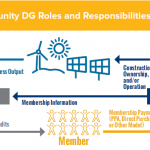
How Community Solar Works in New York
The system the New York utility regulator set up for community distributed generation (CDG, a term which includes community hydropower and community wind as well as community solar) is counter intuitive for most potential customers.
As shown in the diagram above, the electric utility pays for a project's...