An Elephant Hunter Explains Market Dynamics
John Petersen Friday afternoon was a strange time for Axion Power International (AXPW.OB). After trading 200,000 shares early in the day, Axion filed $28 million mixed shelf registration with the SEC at about one o'clock and the fly on the wall reported the filing within minutes. It seems that some stockholders were spooked by the news and assumed that Axion would sell stock right away instead of waiting for the fall deal season. Their knee-jerk selling shoved another 1.1 million shares into the market in three hours and made Friday the second heaviest trading day in Axion's history....

Opportunity Hiding in Plain Sight
Information asymmetry, climate investing and the active management edge.
By Garvin Jabusch
The theory of efficient markets says all stock prices are perpetually accurate, because investors always have complete and up-to-date information about their holdings.
But as any casual observer knows, information and topical awareness are not evenly distributed, even among professional analysts. Reality is always far more complicated than equity markets can quickly assimilate, meaning information asymmetry is a constant. While usually considered a type of market failure, information asymmetry is frequently used as a “source of competitive advantage.” The person with the most information is best equipped to make the best...
A Quick Clean Energy Tracking Portfolio
Yesterday, I outlined a strategy to approximately replicate the performance of a Clean Energy mutual fund at much lower cost, with only a couple hours of effort. I gave a cost example based on $5000 invested in 5 stocks, with another $1000 worth of a single stock added in each subsequent year. This is the procedure I would use to select the initial five stocks. Collect all the top five or ten holdings of the available Clean Energy mutual funds. This data is available from Morningstar, and on fund sponsor's home pages. A few of these holdings may...
The Short Side of Clean Energy
Green Energy Investing For Experts, Part I Tom Konrad, CFA You don't have to be long Renewable Energy stocks to have a green portfolio. Shorting, selling calls, or buying puts on companies and industries which are heavily dependent on dirty and finite fossil fuels not only makes a portfolio greener, it can protect against the effects of a permanent global decline caused by peak oil. Nate Hagens presented this slide at the 2009 International Peak Oil Conference: It shows his conception of the different schools of thought among those of us who understand peak oil. Those represented in...

2023: Looking Up Like the 2009 Disney Movie
There is no shortage of things to worry about as we start 2023. The Federal Reserve is (rightly, in our opinion) worried about inflation becoming entrenched, and so is likely to continue hiking interest rates for much of 2023. Putin looks unlikely to concede defeat in Ukraine, and his desperation may lead to escalation, potentially even of the nuclear variety. California seems to be washing away while remaining in a drought.
China has loosened the zero-Covid policies that helped the country continue functioning during the first stage of the pandemic, while much of the rest of the world shut down. ...
An Elephant Hunter Explains Inflection Point Investing
John Petersen In "An Elephant Hunter Explains Market Dynamics" I discussed the two basic types of public companies; earnings-driven companies that are “bought” in top-tier weighing machine markets and event-driven companies that are “sold” in lower-tier voting machine markets. Today I'll get a bit more granular and show how "sold" companies usually fall into one of two discrete sub-classes that have a major impact on their stock market valuations. As a starting point, I'll ignore the China-based companies that are listed in the US because their quirky metrics would only confuse the analysis. Then I'll break...
The Big Win You Missed
by Tom Konrad, Ph.D., CFA
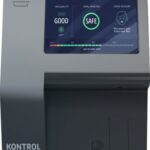
My friend Jan Schalkwijk, CFA of JPS Global Investments just asked me if I had any thoughts on Kontrol Energy (KNR.CN, KNRLF), a Canadian smart building firm I had never heard of. (I just added it to AltEnergyStocks.com's Energy Efficiency and Smart Grid stock lists.)
The stock had just shot up after the client sold and went on a kayaking trip. It had disclosed a sensor for detecting COVID-19 from the air.
While I didn't have anything to say about the company, I did have some thoughts on dealing with the emotions around missing out. Since it's...
UltraPromises Fall Short
When I first came across ProShares' UltraShort ETFs, I thought they were a brilliant idea. They seem to promise a multitude of advantages for investors: The ability to hedge market or sector exposure without having to go short. (Going short requires a margin account, and US law prohibits the use of margin in most retirement accounts.) They should have a better risk profile than shorting. With an UltraShort, you can't lose more than your initial investment. With true shorting, the potential losses are unlimited. As the underlying index rises, each percentage gain creates a smaller dollar fall, while...
Will Climate Advocacy Pay for Shareholders?
On Monday, we learned about big coal companies pushing back against the major US corporations of the US Climate Action Partnership (USCAP,) which advocates for mandatory regulation of greenhouse gas with their own lobbyists. Since I have advocated buying companies that take a proactive stance on climate change, I thought it might be instructive to compare the returns of the original ten members of US-CAP with the returns of the big coal coal companies (more companies have since joined,) over the six months since the Climate Action Partnership issued their Call for Action on Climate Change. The Payoff ...

Free Talk: A Permaculture Portfolio
For readers in the Hudson Valley, I will be giving a free talk next Monday night. I will speak about applying permaculture design principles to your investment strategy. While I developed my own strategy over the last two decades without any reference to these design principles, now that I'm familiar with them, I realize that I have been thinking along these lines for a long time. The design principles are remarkably robust and intuitive.
I used to think Permaculture was just about redesigning our food systems, but it's much much more than that.
The talk is sponsored by the Rondout Valley...
Calling for a Marshall Plan, not a Manhattan Project
Electricity too cheap to meter. For many renewable energy advocates, that is the holy grail… new technology which will not only solve the problem of carbon emissions, but be so transformative that we no longer have to worry about turning off the lights when we leave the room. We could argue for days about the viability of any such technology, be it cold fusion, hydrogen, or photovoltaic nanodots. I personally have strong opinions about the likelihood of any technology to produce energy so cheaply that it would not make sense to use some mechanism...
Why I Sold My Utility Stocks
In times like these of financial uncertainty, regulated utilities have traditionally been considered a safe haven. But that is changing. The Dow Jones Utilities Average was down 30% in 2008, vs. a 34% drop in the Dow Industrials. Not much of a safe haven. In a recent interview, utilities analyst Daniel Scotto noted, that the utility industry offers "a lot less security" than it used to. His reasoning is based mainly on the fact that the regulated portion of utility company's business is smaller than it has been in previous recessions, making them vulnerable to lower growth (or even...

This Isn’t What Green Money Management Looks Like
Tom Konrad, Ph.D., CFA
I don’t spend much time reading investment company ESG reports, but a friend asked me to take a look at a copy of the TIAA’s 2021 Climate Report. I was deeply unimpressed. Here are a few things in the report that triggered my greenwashing radar:
TIAA wants to work with companies to improve their behavior. They call this company engagement. “e do not expect to account for the majority of our emissions reduction — we are primarily focused on company engagements” page 9.
Much of TIAA’s emphasis is on reducing emissions from their own operations,...

Climate-Risk Adjusted Returns and the Weasel Coefficient
By Tom Konrad, Ph.D., CFA
An 80% Weasel Coefficient
Some activists, including a friend of mine, recently had a conversation with representatives of TIAA to try to persuade them to divest from fossil fuels. The conversation was mostly cordial, but predictably did not get anywhere.
One of the activists summed up the response from TIAA as “a non-response with a weasel coefficient of at least 80%.” Regarding the weasel coefficient, he also asked,
Can anyone explain to me what "our overarching strategy which targets climate-risk adjusted returns over the long-term” means in plain English?
Well, yes. Yes I can.
Climate Risk Adjusted Returns
When an investment...
Green Energy Investing For Beginners, Part III: Before You Invest
Tom Konrad, CFA Before you consider green stock market investments, invest in yourself. A reader of my article on asset allocation for green energy investors brought up an important point: we may have green opportunities in our own lives, such as improving the energy efficiency of our homes, which will return much safer and higher returns than green stocks, especially when the market as a whole is as overvalued as I currently believe it is. Homeowners typically have a large number of high-return energy efficiency investments they can make. Since energy efficiency reduces energy use, it both produces returns...
Stocks We Love to Hate
Investing in clean energy is both an economic and a moral decision. From an economic perspective, I believe that constrained supplies of fossil fuels (not just Peak Oil, but also Peak Coal and Natural Gas) are leading to a permanent rise in the value of all forms of energy. From a moral perspective, I know that we and the vast majority of our children are limited to this one planet for generations to come, so we should abuse it as little as possible, so, of all the possible forms of energy to invest in, clean energy (Renewable and...